
Climate crisis
Democracies are trying to reduce emissions and fight crisis. Media helps understand the science better and reach out to effected communities. Climate crisis is a global threat.
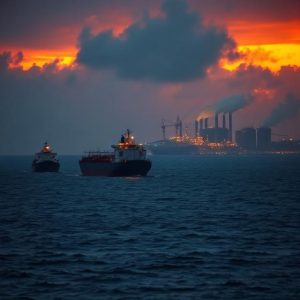
How the Iran energy panic supercharged Europe’s climate debate
EU leaders clash over whether to gut the Emissions Trading System (ETS) or double down on it to escape fossil fuel dependence. Skeptics like Italy’s
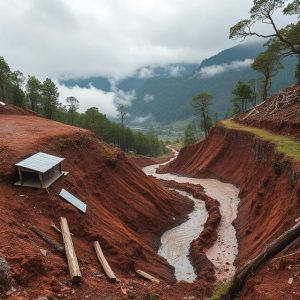
At least 64 killed, dozens reported missing in Ethiopia landslides, floods
At least 64 people have died and 128 remain missing following devastating landslides and flooding in Ethiopia’s Gamo Zone, triggered by relentless torrential rains. Local
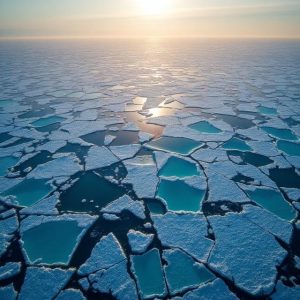
Arctic sea ice among lowest on record: AFP review of US data
The Arctic sea ice extent reached a near-record low of 14.22 million square kilometers on March 10, 2026, potentially ranking among the five smallest covers
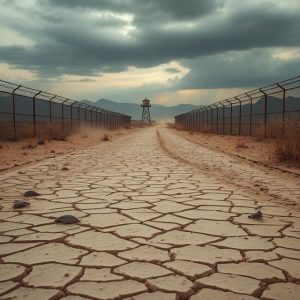
How protecting nature could make the world safer
Nature loss is now recognized as a critical national security threat, as the collapse of vital ecosystems can trigger mass displacement, global food scarcity, and

Humanity heating planet faster than ever before, study finds
A new study reveals that global heating is accelerating at an unprecedented rate, nearly doubling from 0.2°C per decade between 1970 and 2015 to approximately

Brazil flooding death toll rises to 64 as search efforts continue
The death toll from severe landslides and flooding in eastern Brazil has risen to 64, with the state of Minas Gerais, specifically the cities of
Earlier posts:
Microplastics are making it harder for oceans to absorb greenhouse gases, study warns
A new study warns that microplastics are significantly reducing the ocean’s ability to absorb carbon dioxide, weakening a critical natural defense against the climate crisis. These tiny particles interfere with the “biological carbon pump” by harming phytoplankton and zooplankton, which are essential for transferring carbon to the deep ocean. Researchers found that microplastics also release greenhouse gases as they degrade and disrupt microbial communities that regulate ocean health. The study urges governments to treat plastic pollution and global warming as interconnected threats, calling for immediate reductions in single-use plastics to protect marine ecosystems.
Date: January 7, 2026. Source: independent.co
As a climate scientist, I know heatwaves in Australia will only get worse. We need to start preparing now
A leading climate scientist warns that the frequency, duration, and intensity of heatwaves in Australia are set to escalate as global temperatures rise. The article explains that even small increases in average global heat have a direct physical link to more extreme weather events. The author urges immediate government action and adaptation strategies to prepare communities for a future of increasingly dangerous heat conditions.
Date: January 8, 2026. Source: theguardian.com
Experts say Trump pullout from UN climate fighting will hurt world and leave US out of green surge
Experts are warning that the Trump administration’s decision to withdraw the U.S. from the UN Framework Convention on Climate Change (UNFCCC) is a “colossal own goal” that will isolate the country. By exiting the treaty, the U.S. risks losing its influence in the booming global green energy economy and damaging its diplomatic standing. Critics argue this move leaves the U.S. behind while other nations continue to push for climate justice and renewable energy advancements.
Date: January 9, 2026. Source: apnews.com
Richest 1% have ‘blown through’ their carbon budget for 2026 in just 10 days – experts warn
According to a new analysis by Oxfam, the world’s richest 1% exhausted their entire individual carbon budget for 2026 just 10 days into the year. This milestone, dubbed “Pollutocrat Day,” highlights extreme carbon inequality, noting that the emissions from this group are projected to cause 1.3 million heat-related deaths by the end of the century. The report emphasizes that these emissions stem not only from luxury lifestyles involving private jets and yachts but also from significant investments in polluting industries. To address this disparity, experts are calling on governments to implement higher taxes on the super-rich and fossil fuel companies to fund climate damage reparations in vulnerable nations.
Date: January 10, 2026. Source: euronews.com
US to withdraw from dozens of UN, international organisations
US President Donald Trump has announced plans to withdraw the United States from 66 United Nations and international organizations, cutting all funding and participation. The move targets entities deemed “contrary to the interests of the United States,” including major bodies like the Intergovernmental Panel on Climate Change (IPCC) and the UN Framework Convention on Climate Change (UNFCCC). UN Secretary-General António Guterres expressed regret, stating UN operations will continue despite U.S. exit. This decision continues a pattern of international disengagement during Trump’s second term, following earlier withdrawals from the WHO and the Paris climate agreement.
Date: January 8, 2026. Source: aljazeera.com
‘Profound impacts’: record ocean heat is intensifying climate disasters, data shows
New data confirms that the world’s oceans absorbed a record amount of heat in 2025, continuing a trend that is fueling more extreme weather globally. Scientists report that over 90% of the heat trapped by human carbon emissions is taken up by the oceans, leading to more intense hurricanes, marine heatwaves, and rising sea levels. The findings highlight ocean warming as a critical indicator of the climate crisis, with deep-reaching impacts on marine ecosystems and global weather patterns.
Date: January 9, 2026. Source: theguardian.com
Wind is now one of the world’s biggest electricity sources. So why are we switching turbines off?
The UK spent ~£1.47bn curtailing wind generation and paying gas plants to switch on, blaming grid constraints and insufficient network investment. It explains that when wind output is high but grid capacity is limited, clean electricity can’t reach demand centers—so the system compensates by turning wind down and relying on fossil generation elsewhere. The piece frames this as both a cost‑of‑living and climate problem, arguing that grid upgrades and smarter pricing could reduce wasted renewable power.
Date: January 2, 2026. Source: euronews.com
Heat, drought and fire: how extreme weather pushed nature to its limits in 2025
The National Trust’s annual audit reveals that extreme weather in 2025, including drought and wildfires, placed unprecedented strain on UK wildlife and landscapes. Newly planted trees suffered losses of up to 40%, while habitats for species like reptiles and rare birds were devastated by fires in places such as Wales. Conservationists warn that these “alarm signals” indicate nature’s resilience is breaking down under the compounded impact of repeated extreme events.
Date: December 29, 2025. Source: theguardian.com
At least 17 dead as heavy rains trigger flash floods in Afghanistan
Flash floods after heavy rains and snowfall killed at least 17 people and injured others, while also damaging infrastructure and affecting thousands of families. The report notes that Afghanistan is highly vulnerable to extreme weather, with impacts amplified by weak infrastructure, deforestation, and the intensifying effects of climate change. Authorities dispatched assessment teams as conditions worsened in already fragile communities.
Date: January 2, 2026. Source: aljazeera.com
Smartphones, streaming, AI: digital tech’s outsized climate impact in Switzerland
A recent study indicates that the digital sector in Switzerland now consumes 12% of the country’s electricity, an impact comparable to the aviation industry. The rapid growth of data centers and the increasing use of artificial intelligence are driving up energy and water consumption significantly. Researchers argue that extending the lifespan of devices and greening data centers are urgent steps needed to mitigate this rising environmental footprint.
Date: January 3, 2026. Source: swissinfo.ch
How the climate crisis is changing an ancient way of life in Ethiopia
Recurring droughts and extreme weather are forcing traditional pastoralists in Ethiopia’s Afar region to abandon their nomadic lifestyles for farming. With droughts now occurring almost annually rather than every decade, families can no longer rely solely on livestock for survival. Aid organizations are helping communities adapt to this “agro-pastoral” way of life, though funding cuts threaten these resilience programs.
Date: January 2, 2026. Source: independent.co
‘When you plant something, it dies’: Brazil’s first arid zone is a stark warning for the whole country
Researchers have identified Brazil’s first-ever arid zone in northern Bahia, a shift from semi-arid status caused by rising temperatures and falling rainfall. This transition, occurring in just one generation, threatens to accelerate desertification in the Caatinga biome and serves as a national climate warning. Local communities dependent on goat rearing are struggling as crops die and traditional water sources evaporate in the extreme heat. Experts warn these climate shifts are irreversible, necessitating urgent adaptation and mitigation strategies.
Date: December 28, 2025. Source: theguardian.com
CO2 soon to be buried under North Sea oil platform
France 24 describes Denmark’s Greensand carbon capture and storage project, aiming to inject liquefied CO₂ into depleted reservoirs under the North Sea. The piece notes early plans to store hundreds of thousands of tonnes annually, with ambitions to scale to millions by 2030. It frames CCS as a tool promoted for hard‑to‑abate sectors, while acknowledging cost and complexity challenges.
Date: December 22, 2025. Source: france24.com
From deadly heatwaves to flash floods: How Europe’s extreme weather events defined 2025
In 2025, Europe faced record heatwaves and floods, resulting in over 24,000 heat-related deaths and €43 billion in economic losses. Scientists attributed the vast majority of these fatalities to human-induced climate change, with Spain, Italy, and Romania being hardest hit. As the world’s fastest-warming continent, experts warn these extreme events now represent a “new normal.” Future projections suggest annual climate-related costs could triple by 2029.
Date: December 27, 2025. Source: euronews.com
Swiss court to hear Indonesian islanders’ climate case against cement giant
A Swiss court has agreed to hear a landmark climate lawsuit against cement giant Holcim brought by four Indonesian islanders. The plaintiffs are seeking compensation for flood damages and a reduction in emissions, citing the company’s significant historical contribution to global warming. This case marks the first time a Swiss court has admitted climate litigation against a big corporation. While Holcim plans to appeal, the case is a major milestone for “loss and damage” claims from the Global South.
Date: December 22, 2025. Source: aljazeera.com
Canada Announces New Methane Emission Standards for Oil and Gas Sector
Canada has finalized regulations to cut methane emissions from the oil and gas sector by 75% relative to 2014 levels by 2035. The new rules, starting in 2028, will ban routine venting and mandate stricter infrastructure inspections to repair leaks. While the timeline was slightly extended to assist industry compliance, the policy remains a cornerstone of the government’s climate strategy.
Date: December 16, 2025. Source: aljazeera.com
The Plants That Thrive in Salt: Could Halophytes Help Save Coastal Farming?
Rising sea levels and intense droughts are salinizing soil in the Venice lagoon, making traditional agriculture nearly impossible. Scientists and chefs are now turning to “halophytes,” or salt-tolerant wild herbs, as a resilient alternative for food production. With the UN estimating that up to 32% of global land could be affected by salinity due to the climate crisis, these plants represent a vital tool for future food security.
Date: December 21, 2025. Source: theguardian.com
Scientists and data explain why Kenya’s lakes are rising as thousands face an uncertain future
Residents in Kenya’s Rift Valley are facing a crisis as lakes such as Naivasha and Baringo continue a 15-year trend of rising water levels. Researchers attribute the phenomenon to climate change-induced heavy rainfall and shifts in regional geology that have submerged entire villages and farmlands. The displacement has left thousands of people without homes or livelihoods, prompting calls for better climate adaptation infrastructure.
Date: December 22, 2025. Source: apnews.com
Czech climate policy gutted by minister who vowed ‘green blood will run’
Czechia’s interim environment minister Petr Macinka eliminated the ministry’s climate protection section, arguing the department must be “de‑ideologized.” He previously claimed that “the climate crisis is over today,” and the change is presented as part of a broader shift under the new governing coalition led by Prime Minister Andrej Babiš. The outgoing environment minister criticized the move as populist and rooted in fossil‑fuel ideology, warning it could weaken Czech representation in EU and international climate negotiations.
Date: December 18, 2025. Source: politico.eu
Norway’s green transition is putting Sami culture at risk
Sami herder Ellinor Guttorm Utsi argues that Norway’s push for wind energy threatens her people’s ancient culture and livelihoods. The government plans to build hundreds of turbines on traditional grazing lands, which would fragment ecosystems and disrupt critical reindeer migration routes. Utsi contends that prioritizing industrial green energy over Indigenous rights mirrors past state efforts to erase Sami identity. She calls for the protection of their heritage, emphasizing that climate solutions must not come at the expense of vulnerable Indigenous communities.
Date: December 19, 2025. Source: aljazeera.com
Arctic Endured Year of Record Heat as Scientists Warn of ‘Winter Being Redefined’
The Arctic experienced its hottest year in 125 years between October 2024 and September 2025, warming four times faster than the global average. NOAA reported that sea ice reached its lowest maximum extent in the 47-year satellite record, while Greenland’s ice sheet lost a staggering 129 billion tons of ice. Scientists warn that these shifts are “redefining winter” and causing cascading effects on global sea levels and fisheries.
Date: December 16, 2025. Source: theguardian.com
Catastrophic US floods linked to hotter climate
Catastrophic flooding events across the United States are increasingly being linked to human-caused climate change, according to experts. A warmer atmosphere holds more moisture, leading to more intense and heavier rainfall, which is the primary factor driving these destructive floods. Recent events, such as the major atmospheric river that brought historic levels of precipitation to the Pacific Northwest, demonstrate how the rising global temperature is supercharging storm systems.
Date: December 12, 2025. Source: dw.com
‘Food and fossil fuel production causing $5bn of environmental damage an hour’
A major UN Global Environment Outlook report reveals that the unsustainable production of food and fossil fuels causes approximately $5 billion in environmental damage every hour. The report warns that the interconnected crises of climate change, pollution, and biodiversity loss are undermining the global economy and human health. Experts urge a rapid transformation in governance and finance, noting that the cost of action is far lower than the long-term price of inaction.
Date: December 9, 2025. Source: theguardian.com
‘A shift no country can ignore’: where global emissions stand, 10 years after the Paris climate agreement
Ten years after the landmark Paris climate summit, a review indicates that while the world has avoided the worst-case scenario of 4C warming, current policies still point to a dangerous 2.5C rise. The article highlights the massive growth of renewable energy, which accounted for over 90% of new power capacity last year, with China leading the transition. However, failure by wealthy nations to fully support developing countries and inconsistent political commitments continue to threaten global climate goals.
Date: December 13, 2025. Source: theguardian.com
South Sudanese community fights to save land from relentless flooding worsened by climate change
Residents in South Sudan are struggling to protect their homes and livelihoods as the country faces catastrophic flooding for the sixth consecutive year. The United Nations reports that over 375,000 people have been displaced in 2025 alone, with seasonal floods becoming more severe and unpredictable due to climate change. Community members are forced to manually dredge material to build barriers against the encroaching water, which has permanently altered the landscape.
Date: December 14, 2025. Source: independent.co
Ocean warmed by climate change fed intense rainfall and deadly floods in Asia, study finds
A new analysis by the World Weather Attribution (WWA) found that ocean temperatures warmed by human-caused climate change intensified the rainfall that caused deadly floods and landslides across Asia. The study focused on the heavy precipitation from Cyclones Senyar and Ditwah, which impacted Malaysia, Thailand, Indonesia, and Sri Lanka. Researchers determined that warmer sea surface temperatures in the North Indian Ocean provided excess heat and moisture, making the storms more severe. The catastrophic floods and landslides resulting from these storms tragically killed over 1,600 people, with hundreds more reported missing.
Date: December 10, 2025. Source: apnews.com
2025 on track to tie for second hottest year on record, EU monitor says
he EU’s Copernicus Climate Change Service reports that 2025 is set to be the second hottest year on record, tied with 2023. Global temperatures from January to November averaged 1.48C above pre-industrial levels, bringing the planet perilously close to the 1.5C threshold. The agency warned that these milestones reflect the accelerating pace of climate change, following a year marked by extreme weather events and heatwaves.
Date: December 9, 2025. Source: aljazeera.com
More than 60,000 penguins starve to death near Africa after fall in sardine numbers
More than 60,000 African penguins starved to death off South Africa due to a collapse in sardine populations. This food scarcity was caused by a combination of overfishing and the climate crisis affecting ocean conditions. Unable to build necessary fat reserves, the penguins died during their crucial moulting periods. Now classified as critically endangered, experts say restoring sardine levels is essential to prevent the species’ extinction.
Date: December 5, 2025. Source: independent.co
A Loophole Allows Ranchers to Renew Grazing Permits With Little Scrutiny of the Environmental Impact
The Bureau of Land Management is renewing grazing permits on public lands with minimal environmental review, often bypassing detailed assessments of land health. This lack of oversight allows for continued overgrazing, which degrades ecosystems and contributes to climate-warming methane emissions from cattle. Agency insiders report that political pressure and staffing shortages are preventing them from properly enforcing regulations to protect these landscapes.
Date: December 1, 2025. Source: propublica.org
Heavy rains hamper recovery as death toll from floods in Asia exceeds 1,750
Relentless rains are obstructing rescue and recovery operations across Asia as the death toll from recent climate-fueled floods rises above 1,750. Indonesia and Sri Lanka are among the worst affected, with hundreds of people still missing and thousands displaced from their homes. Officials highlight the disaster as a stark example of the humanitarian costs associated with the accelerating climate emergency.
Date: December 6, 2025. Source: aljazeera.com
Global race to secure critical minerals for weapons threatens climate, warns report
A recent report warns that the intense worldwide competition to secure critical minerals is undermining global efforts to combat the climate crisis. These minerals are vital both for the transition to renewable energy technologies and for the manufacturing of military weaponry. The high demand, particularly driven by US Pentagon requirements, is accelerating environmentally destructive mining practices globally. This resource race often forces climate mitigation to take a back seat to national security interests and supply chain dominance.
Date: December 4, 2025. Source: theguardian.com
Death toll from floods and landslides on Indonesia’s Sumatra island rises to 164
The death toll from the catastrophic floods and landslides that struck Indonesia’s Sumatra island rose to 164, with emergency responders struggling to reach affected areas. The disaster was driven by Tropical Cyclone Senyar, a rare weather event in the Strait of Malacca that produced torrential rain. Indonesian President Prabowo Subianto commented that the disaster highlights growing global challenges like climate change and environmental degradation. He emphasized the urgent need to strengthen environmental awareness and seriously prevent destructive practices like illegal logging. Unfavorable weather and cut-off roads continue to challenge rescue and aid efforts across the region.
November 28, 2025. apnews.com
More than 40 people killed as heavy rains trigger floods in Sri Lanka
Heavy rains and resulting floods and landslides claimed the lives of over 40 people across Sri Lanka, with authorities halting train services and closing major roadways. The severe weather, driven by intense downpours, caused rivers and reservoirs to overflow, inundating homes and fields in multiple regions. An additional 21 people were reported missing following landslides in the mountainous areas of the country. Officials were seen using boats and air force helicopters to rescue residents trapped by the rising floodwaters. Experts have warned that Sri Lanka is facing a future of more frequent and destructive flood events due to the climate crisis.
November 27, 2025. aljazeera.com
Canada’s Carney rolls back climate rules to boost investments
Canadian Prime Minister Mark Carney signed an agreement with the province of Alberta to roll back several major federal climate rules in a bid to spur investment in energy production. The deal includes scrapping a planned emissions cap on the oil and gas sector and dropping clean electricity regulations. The government aims to diversify exports away from the United States and boost the Canadian economy amid international trade uncertainty. Alberta, in turn, committed to strengthening industrial carbon pricing and supporting a massive carbon capture-and-storage project. The move was heavily criticized by environmentalists, leading to the resignation of the former environment minister, who argued the national climate plan was being dismantled.
November 27, 2025. aljazeera.com
Scientists Warn UK of Catastrophic Climate Risks
A host of prominent scientists warned UK leaders that the country faces severe, interconnected risks to its economy, public health, food systems, and national security from climate change. Experts cited the risk of collapse in the Atlantic Overturning Current (AMOC), which could subject London to extremely cold -20°C winters and simultaneously hotter-than-today summers. A retired general noted that the climate crisis is a greater strategic threat to the nation than military conflicts. The briefing urged politicians to embrace deep, rapid, and fair decarbonization to ensure the country’s resilience and stave off the worst potential outcomes.
November 27, 2025. theguardian.com
Kenyan lake flood displaces thousands, ruins homes and schools
Unprecedented flooding from Kenya’s Lake Naivasha has displaced an estimated 7,000 people, with hundreds of homes, churches, and schools now completely submerged. The lake’s water level has risen drastically in recent years, advancing an estimated 1.5 kilometers (1 mile) inland into local communities. Residents in the Kihoto district are dealing with waist-high water, overflowing sewage, and increased health risks. While some experts attribute the rising waters primarily to increased rainfall driven by climate change, local geologists also point to tectonic movements sealing underground outflows as a contributing factor.
November 20, 2025. aljazeera.com
‘We can no longer predict the seasons’: why Indonesia’s coal mindset has to change
Indonesia, which is both a climate-vulnerable nation and the world’s sixth-largest greenhouse gas emitter, faces intense pressure to shift away from its reliance on coal. Despite recent devastating floods in Bali and increasing climate-related disasters, policies continue to lock the country into fossil fuel dependency, particularly through loopholes allowing “captive” coal plants for industrial use. Indonesia is using its presence at COP30 to position itself as a voice for the Global South, pushing for climate equity and finance, while simultaneously promoting its vast carbon-market potential. Experts warn that the country’s reliance on coal and its delayed emissions peak (now targeted for 2035) demand immediate, faster cuts.
November 20, 2025. theguardian.com
EU threatens to block ‘weak’ COP30 deal
EU diplomats have warned they could veto the COP30 agreement unless stronger commitments on greenhouse gas cuts, a fossil fuel phase-out, and deforestation are included. They argue the current draft lacks scientific grounding, concrete transition plans, and accountability mechanisms. The threat underscores deep divisions as major oil- and gas-producing nations resist stronger climate measures.
Nov 21, 2025 https://www.politico.com/
Drug Trade, Land Grabs Threaten Amazon Communities on Climate Front Lines
In the Amazon, particularly Peru’s Amarakaeri Communal Reserve, the most immediate threat to the rainforest is not climate change directly but organized crime. Indigenous communities are struggling to protect their ancestral lands as drug trafficking, illegal gold mining, and logging intensify. This illegal activity leads directly to deforestation, undermining global efforts to preserve crucial carbon sinks. The violence is escalating, with forest guardians receiving death threats while working to defend the trees.
Nov 22, 2025 swissinfo
The EU is not fighting fossil fuels, only emissions, von der Leyen says ahead of G20
European Commission President Ursula von der Leyen created controversy by stating that the EU’s climate fight targets the emissions from fossil fuels, rather than the fuels themselves. Made just as the COP30 talks were entering their final, difficult phase, this distinction was seen by critics as a potentially dangerous weakening of the EU’s stance. Climate advocates warned that this position could undermine international efforts to secure a global commitment to phase out oil and gas. Although the Commission later reaffirmed its commitment to the fossil fuel transition, the comment risked damaging the EU’s credibility as a global climate leader.
Nov 21, 2025 euractiv.com